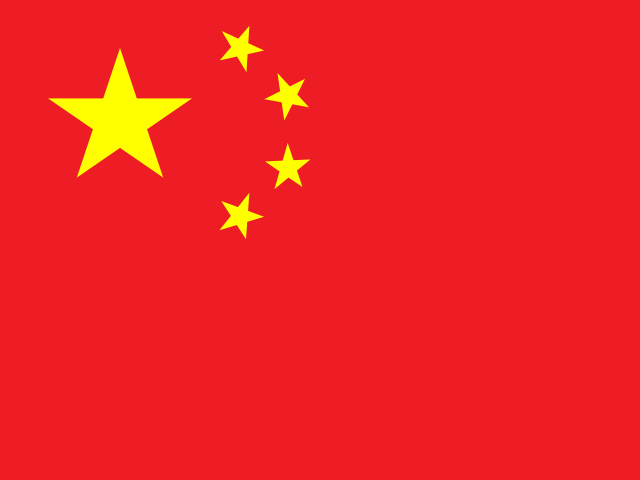
 China
China
One-party communist state
China leans hardest toward Order, Authority and Secular.
The 12 axes, with receipts
Unitary one-party state that tests policies in local pilots; autonomy for Tibet, Xinjiang and Hong Kong is tightly limited.
Leninist one-party rule with no competitive national elections.
Pervasive surveillance, internet censorship, harsh drug laws, protest suppressed.
Defends UN-centred sovereignty and non-interference; rejects pooled sovereignty.
Rapid military build-up; conscription exists in law but is filled by volunteers.
Very little immigration; Mandarin and national identity promoted over minority languages.
Land and key industries are state-owned; private firms work under party oversight; no inheritance tax.
Markets set most consumer prices, but the state steers investment through industrial plans.
Champions globalisation abroad while pursuing self-reliance and controlling foreign stakes.
Officially atheist state that controls religious bodies.
No same-sex unions; pronatalist family policy; abortion legal and common.
Heavy bets on AI, space, nuclear and EVs; jailed the scientist behind gene-edited babies.
Thinks most like
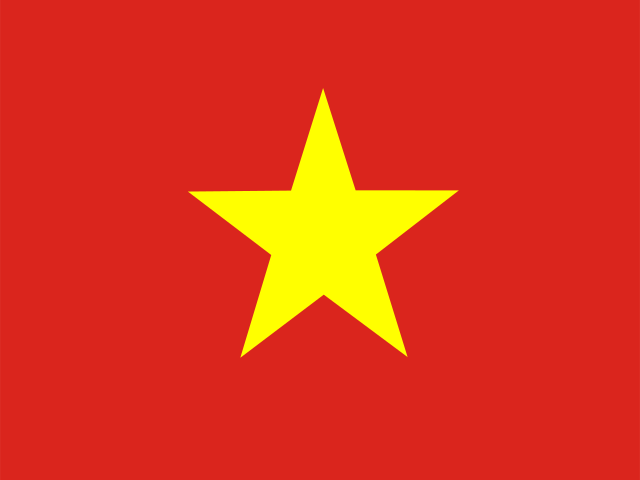 Vietnam
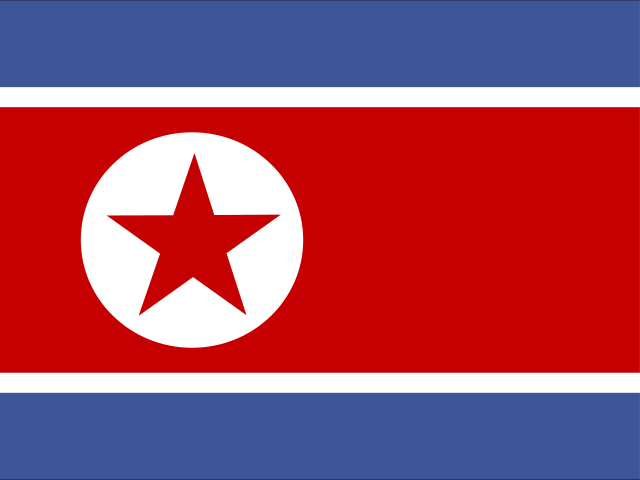 North Korea
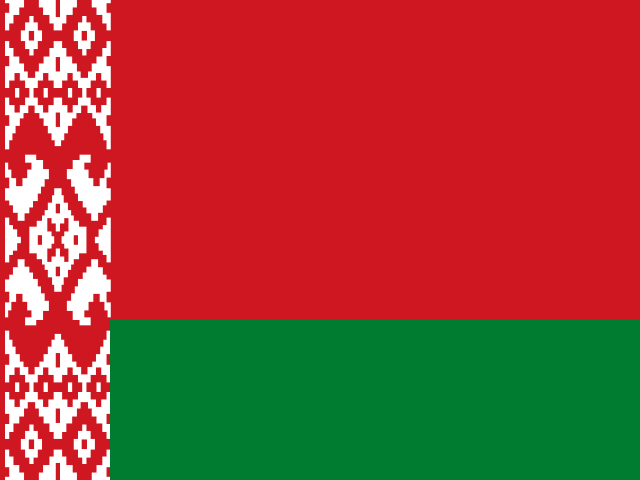 Belarus
How close are you to China?
Answer 60 quick questions and get your own 12-axis profile, plus the country that thinks most like you.
How we score countries: each one answers the same 60 questions you do, based on its laws and mainstream consensus, not whoever is in power right now. Historical regimes answer for their own period, and questions that didn't exist back then are skipped. It's a simplification, not a verdict.