Soviet Union
One-party communist state
Soviet Union leans hardest toward Authority, Order and Hawk.
The 12 axes, with receipts
Formally a federation of republics, in practice run from Moscow.
One-party dictatorship of the Communist Party.
Secret police, censorship and labour camps.
Proletarian internationalism in rhetoric, jealous guarding of Soviet sovereignty in practice.
Superpower army, universal conscription, interventions from Hungary to Afghanistan.
Early support for minority cultures gave way to Russification.
Abolished private ownership of the means of production; enterprises run by the state, not workers.
Central planning of prices, wages and investment.
State monopoly of foreign trade and a drive for autarky.
State atheism and persecution of religion.
Abortion legal for most of its history; homosexuality criminalised.
Space race and nuclear power; industry over nature (the Aral Sea).
Thinks most like
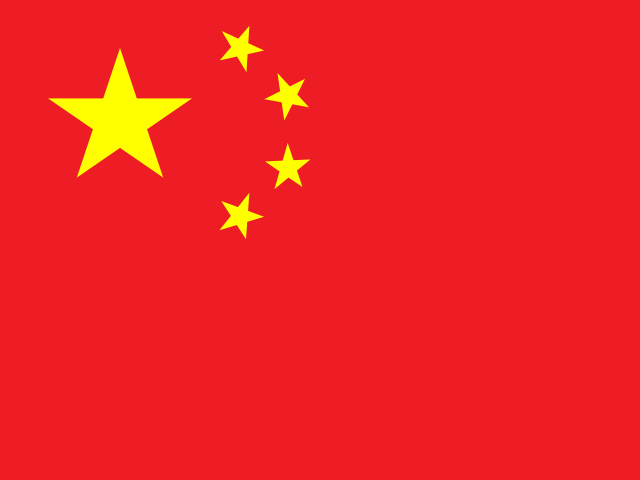 China
China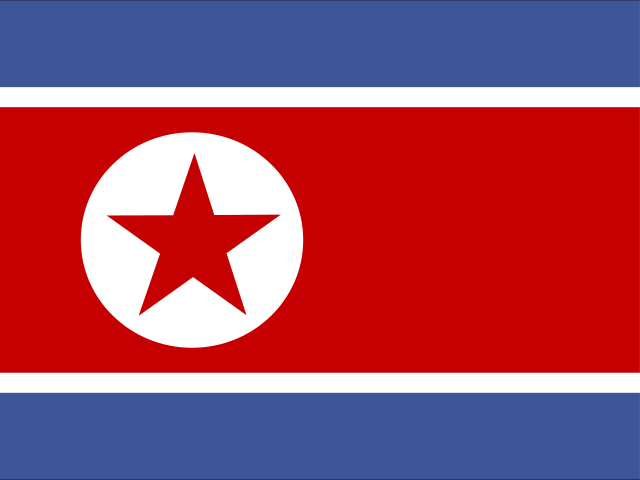 North Korea
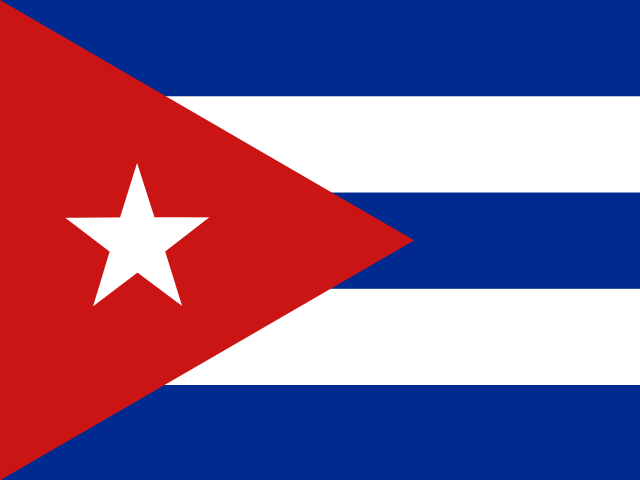 Cuba
CubaHow close are you to Soviet Union?
Answer 60 quick questions and get your own 12-axis profile, plus the country that thinks most like you.
How we score countries: each one answers the same 60 questions you do, based on its laws and mainstream consensus, not whoever is in power right now. Historical regimes answer for their own period, and questions that didn't exist back then are skipped. It's a simplification, not a verdict.